If you want to gain an advantage, you often have to break with traditional business practices. This is where the concept of developer self-service comes into play, which is central to platform development. It’s not just an innovation, but a strategic approach that significantly speeds up your development cycle and drastically reduces the time to market for your digital products and services. By focusing on this approach, especially when setting up AWS infrastructure, you can build a more agile, efficient and future-proof digital platform. Learn with us how to get started with Developer Self-Service to bring your project to market faster and increase your competitiveness.
Introduction: Platform engineering in action
Platform engineering is revolutionizing the way companies work and create value. At its core, it is about building and maintaining digital platforms that enable developers to work more independently and productively and align with business requirements.
“Platform engineering is about creating an ecosystem in which developers can flourish,” says Ivan Ermilov, DevOps Ambassador at Container8.
You can find our guide to platform engineering here: To the guide.
The key to getting started: Developer Self-Service
The path to platform engineering often starts with self-service for developers. This approach allows developers to access the resources, tools and environments they need without the constant intervention of other stakeholders.
What is a Developer Self-Service?
It’s a paradigm shift. Instead of waiting for approvals and support from the IT department, developers can use self-service portals to access cloud resources, deploy applications and manage services independently.
Why start with a Self-Service for developers?
Starting with a self-service for developers has several advantages:
- Enables developers: You are given the freedom to experiment and innovate.
- Reduces bottlenecks: Frees IT teams from routine tasks.
- Encourages learning and growth: Developers learn by doing and thus expand their skills.
- Accelerates time-to-market: Faster deployment and testing of applications.
Overcoming the challenges
The transition to a developer self-service model is not without its challenges. Ivan Ermilov names several main obstacles:
- Communication gaps: Traditionally, developers and operations teams often work in silos.
- Security and compliance risks: Self-service can lead to uncontrolled access to resources.
- Complexity in onboarding: New developers may struggle with the autonomy that self-service offers.
Overcoming these challenges
Successful companies have found ways to overcome these challenges:
- Better cooperation: Tools such as Jira Service Management promote better communication between the teams.
- Automated governance: The implementation of automatic checks and reconciliations ensures security and compliance.
- Structured onboarding processes: Guided onboarding helps new developers to get used to self-service models.
From challenge to opportunity: A Success Story
One of the most compelling aspects of switching to a developer self-service is seeing it in action. Marcin Guz from BSH provides an inspiring example. Now let’s take a closer look at the practical demonstration in a recent webinar on platform engineering.
In our on-demand webinar, you will learn how to set up your cloud infrastructure with Jira Service Management in just one hour with a developer self-service.
The BSH case study: a transformation in the real world
Marcin Guz’s experience at BSH vividly illustrates the transformative impact of developer self-service. The company achieved remarkable efficiency gains by automating AWS account creation with the help of Jira Service Management.
“By reducing the time it takes to provision AWS accounts, we have been able to significantly increase the satisfaction of our internal customers and reduce the time it takes to create accounts from weeks to hours,” Marcin notes. This success story underlines the tangible benefits of moving to a self-service model.
Continue reading the full success story of BSH: Container8 – Internal Developer Platform at BSH.
A look at the Developer Self-Service: The technical demonstration
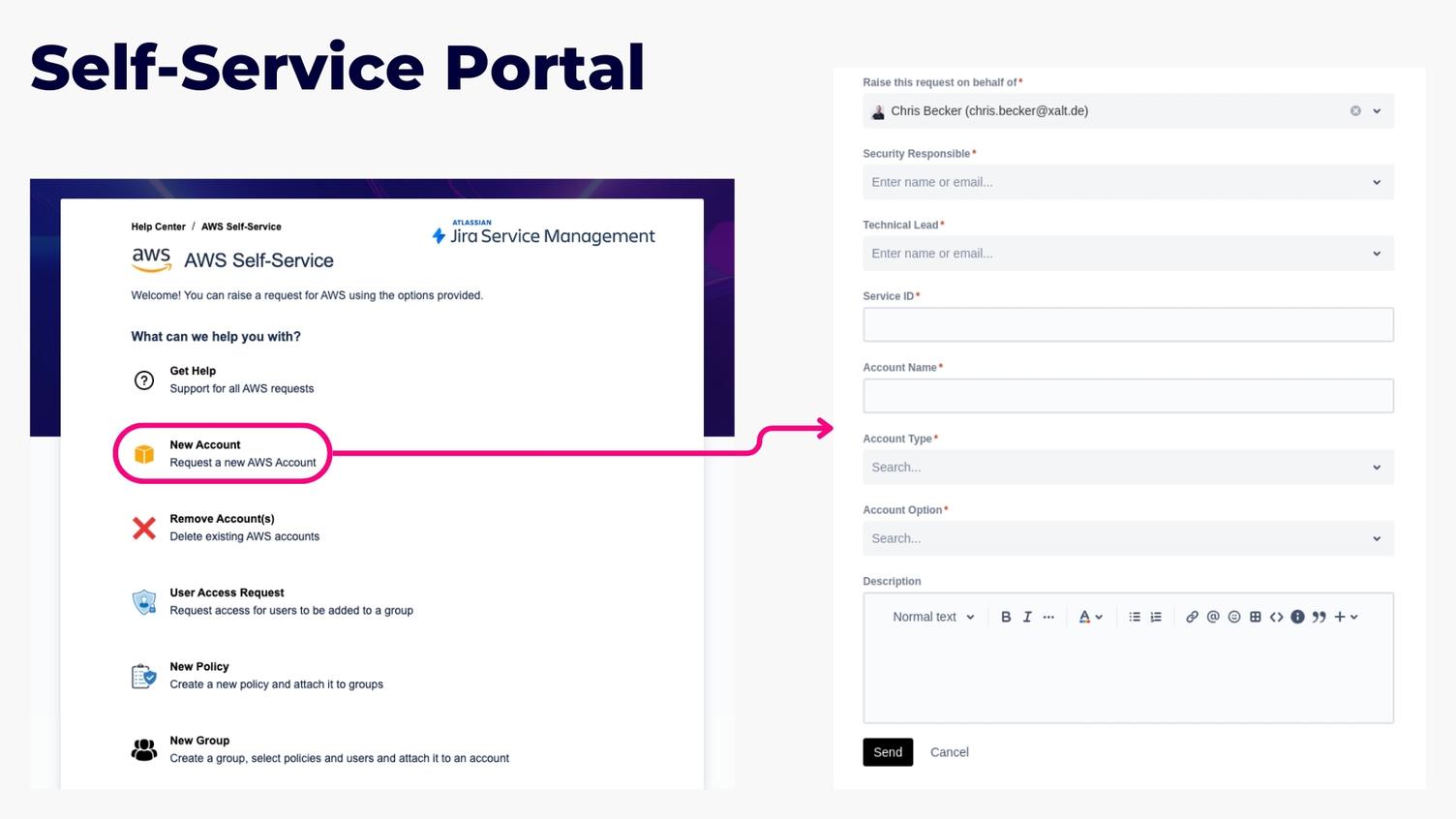
Chris Becker, DevOps ambassador at Container8, provides an insightful look at how Jira Service Management facilitates the self-service of developers and, thus, the entry into platform development.
A step-by-step walkthrough for developer self-service
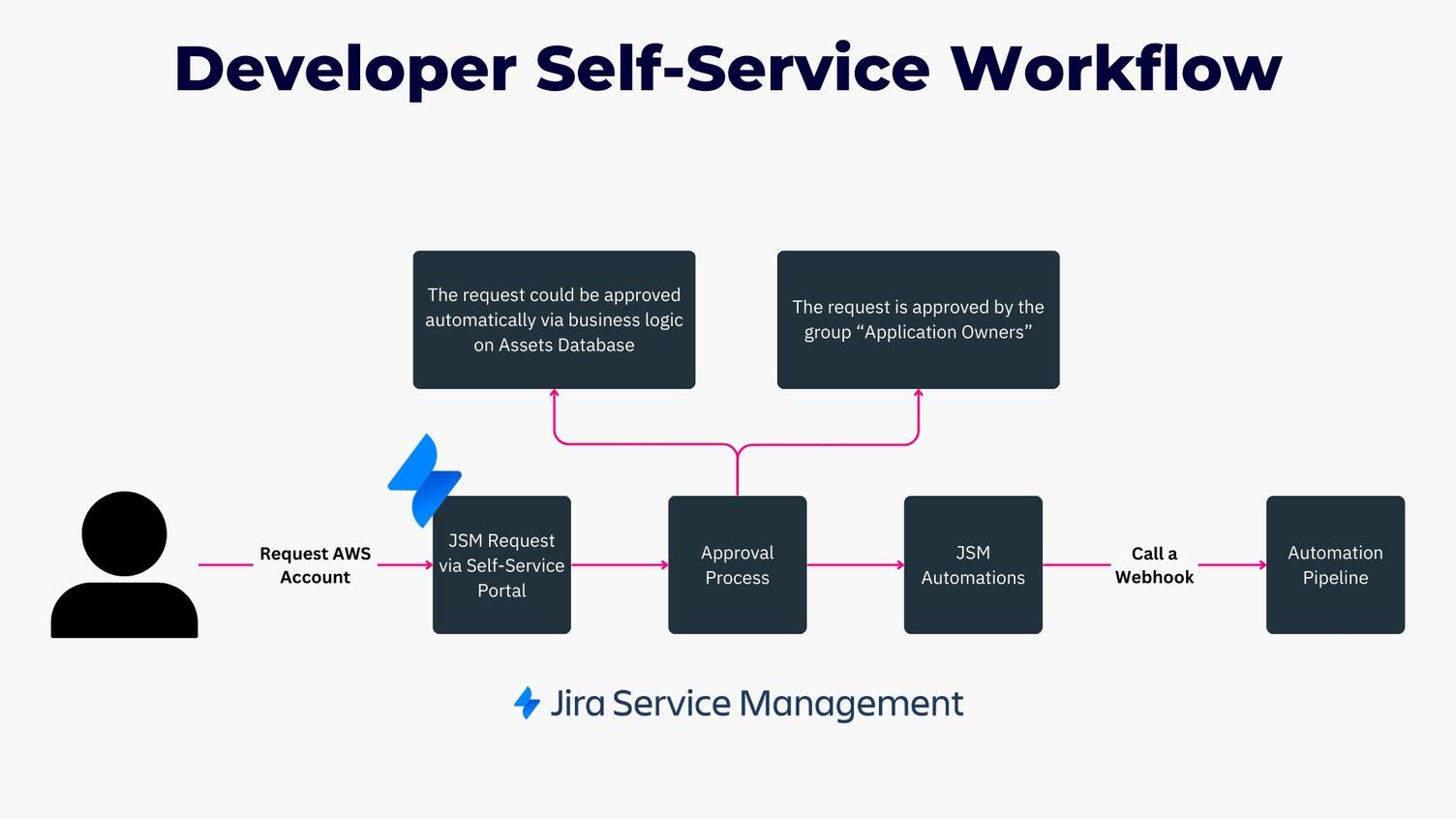
Request and approval process: Developers submit resource requests via a simple, user-friendly interface. These requests are then routed for approval, maintaining oversight while empowering developers.
Automated resource provisioning: Once approved, AWS accounts are provisioned automatically. This automation streamlines the entire process and shortens the time from request to resource availability.
Feedback loop and adjustments: The system contains feedback mechanisms that enable continuous improvement of services based on actual user experience.
The automation pipeline in action
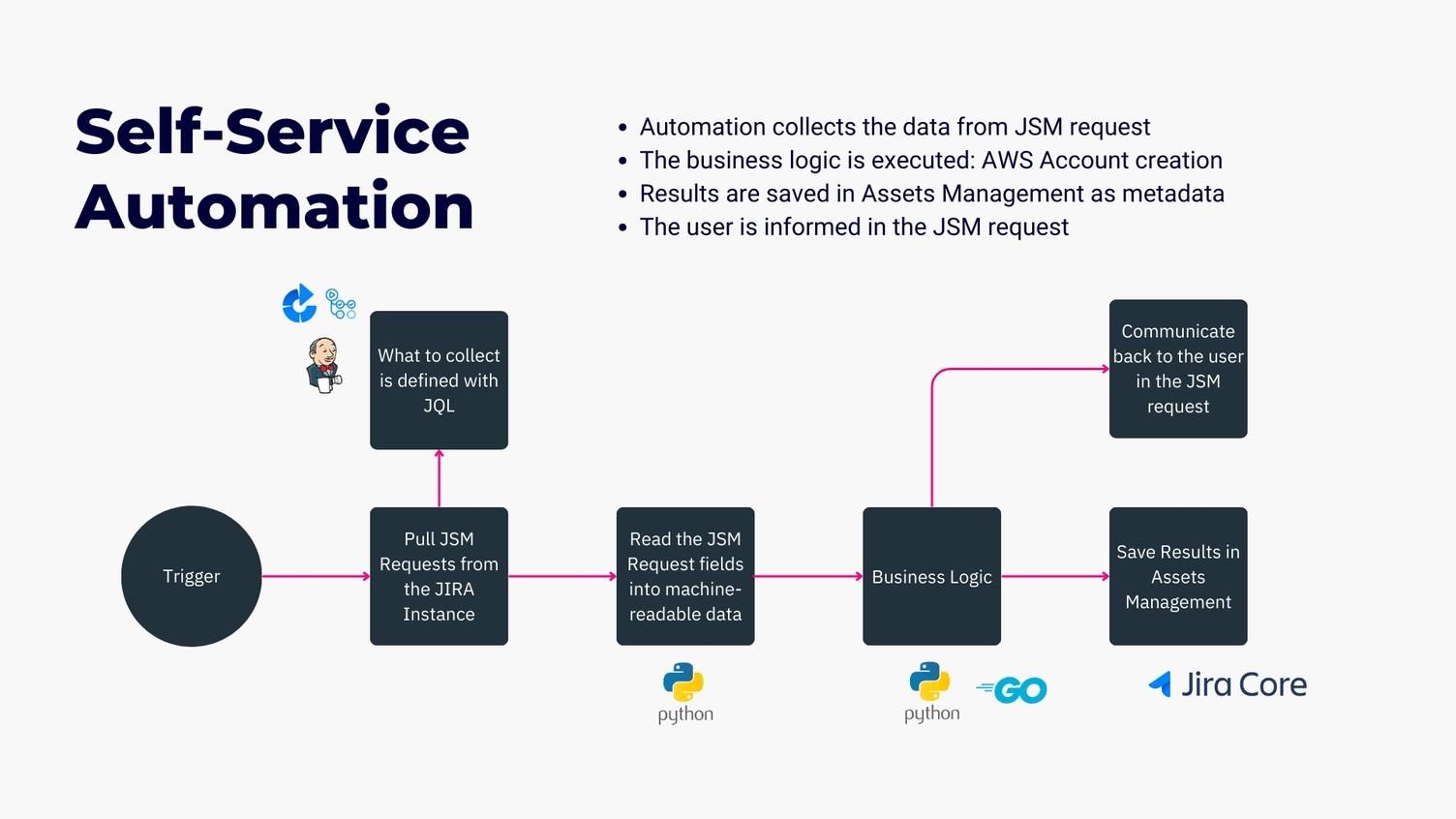
Collecting requests and filling queues: The system automatically collects service requests and assigns them to the appropriate queues.
Execute the business logic: Based on predefined rules and conditions, the system executes the appropriate business logic, ensuring that each request is processed efficiently and in accordance with company guidelines.
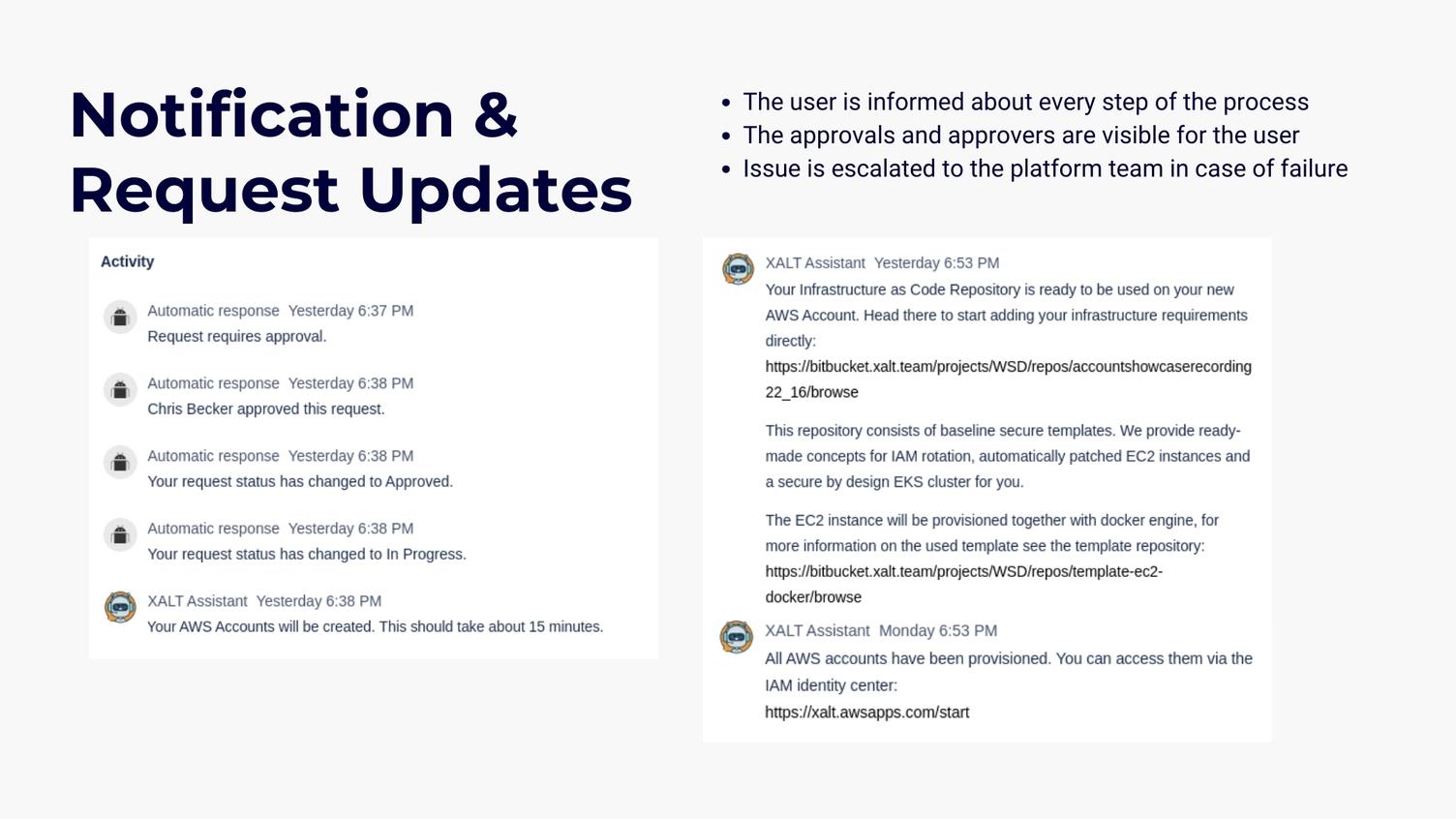
Manage feedback and metadata
Assets in Jira Core: The system uses asset management in Jira Core to manage feedback and metadata. This feature ensures that all user interactions and system changes are tracked and provides valuable data for future improvements.
The impact of Developer Self-Service at BSH
The BSH success story and Chris Becker’s demonstration illustrate the profound impact of developer self-service on organizational efficiency and innovation. By giving developers the tools and autonomy they need, organizations like BSH are not only streamlining their processes, but also fostering a culture of self-reliance and continuous improvement.
In summary, the success story and detailed demonstration from the webinar clearly show how a self-service for developers acts as a cornerstone in platform development, driving efficiency and innovation. This approach, illustrated by BSH’s experience and the practical insights from the technical demonstration, provides a blueprint for other organizations looking to follow a similar path.
The future of platform engineering and what’s next
The future of platform engineering is characterized by continuous innovation, adaptation to new technologies and a constantly evolving approach to digital platforms.
Here is a brief outlook on the future:
Incorporate a wider range of technologies
Technology plays a central role in platform engineering and underlines the importance of adapting to a wide range of technologies. Platform engineering is not just about cloud infrastructure, but also about integrating different tools and platforms. In the future, a wider range of technologies are likely to be integrated into platform engineering to meet a broader range of business needs.
Stronger focus on developer experience
As platform engineering evolves, the focus will increasingly be on developer experience. Self-service models are critical to improving developer autonomy and productivity. Future developments in platform engineering are likely to continue to emphasize tools and processes that support developers.
Integration of advanced automation
Automation is a key issue and its importance will only increase. Future platform developments are likely to include more sophisticated automation strategies that not only streamline processes, but also incorporate elements of artificial intelligence and machine learning for smarter resource management and predictive analytics.
Multi-cloud and hybrid strategies
As organizations grow and their needs become more complex, a one-size-fits-all cloud solution is less and less feasible. The future of platform engineering is likely to involve more nuanced approaches, including hybrid and multi-cloud strategies to ensure flexibility and optimal performance.
Continuous learning and knowledge transfer
The importance of continuous learning and knowledge transfer in platform development cannot be overstated. The more the industry progresses, the more important it becomes to stay up-to-date and share best practices. Communities of practice, webinars, and collaborative platforms will play a key role in fostering a culture of continuous learning.
Customer-centered product development
A customer-centric approach is of great importance. Future developments in platform engineering will continue to align technological capabilities with customer needs and experiences and ensure that the platforms developed are technologically advanced and offer real added value to end users.
Conclusion
Remember: Platform engineering with developer self-service requires a continuous learning and adaptation process.
“The future of platform engineering lies in continuous development,” concludes Ivan.
Learn more
Want to delve deeper? Learn more about platform engineering in our comprehensive article: Guide to Platform Engineering and How to Get Started. Find out how you can further improve your company’s capabilities and stay ahead in the digital race.
Don’t forget that platform engineering is not just about technology, but also about fostering a culture of innovation and ownership. Start your journey today and unleash the potential of your development teams!
In our webinar, you will learn more about getting started with platform engineering and how you can set up your cloud infrastructure with Jira Service Management in just one hour via a self-service for developers.